One Partner, Total Accountability: Why Turnkey Projects Deliver Better Results
Industrial projects rarely fail because of a lack of good ideas. More often, problems start when responsibilities become fragmented. One company handles engineering. Another manages fabrication. A third installs controls. By the time the system is ready for startup, timelines have slipped, communication has stalled and nobody is completely sure who owns the next problem.
That disconnect is exactly why more modern manufacturers are moving toward turnkey project execution.
At Seifert Engineering, turnkey means more than delivering a finished system. It means taking ownership of the entire process from the earliest design conversations through final installation and startup. Engineering, fabrication, controls integration, assembly, testing and on-site installation are coordinated through one team working toward the same goal.
When every phase of a project operates under the same roof, communication becomes faster, decisions become clearer and projects tend to move forward with fewer surprises.
A Better Way to Manage Complex Projects
Large industrial and automation projects involve a constant stream of moving parts.
Schedules change.
Designs evolve.
Equipment lead times shift.
When multiple vendors are trying to coordinate independently, even small issues can create delays that ripple across the entire project.
A turnkey approach simplifies that process.
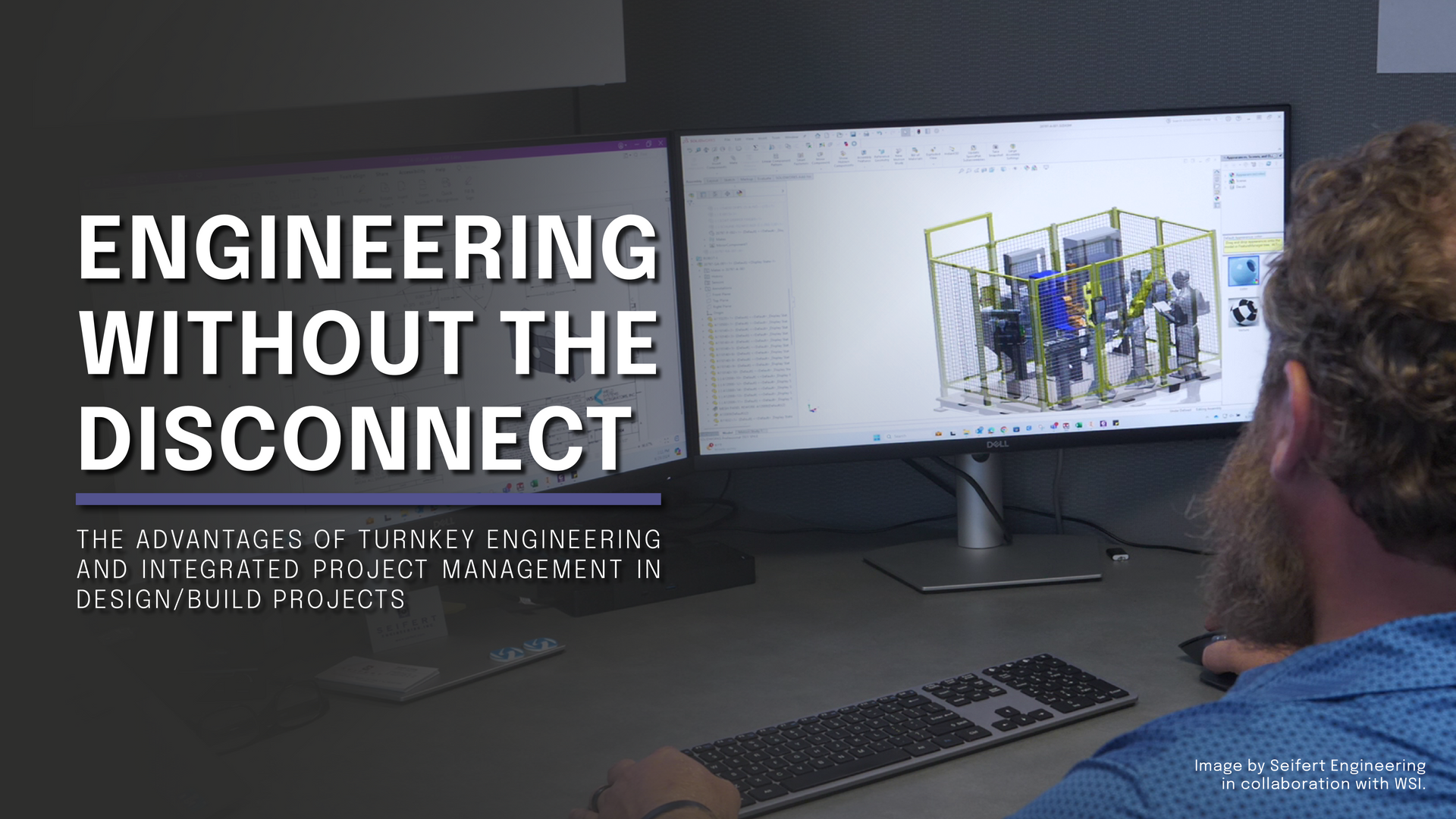
Seifert Engineering combines engineering services with in-house design, fabrication, assembly, testing and installation capabilities inside our state-of-the-art Design / Build Center. Instead of handing a project off from one company to another, our teams work together throughout the entire build process.
That level of coordination matters.
When engineering and fabrication teams can collaborate directly, problems are often identified before they become expensive field issues. When controls specialists are involved early in the process, system integration tends to move more smoothly during startup. When project managers have visibility into every phase of the build, scheduling becomes easier to manage and communication stays consistent.
For customers, the biggest advantage is accountability. There is one partner responsible for the success of the project from beginning to end.
Building Confidence Through Prototype Development
Not every project starts with a fully defined solution.
In many cases, manufacturers are trying to improve a process, automate a manual operation, or evaluate a new technology before committing to full production. Moving directly into a large-scale investment without testing the concept first can create unnecessary risk.
That is where prototype development becomes valuable.
Seifert Engineering develops proof-of-concept systems and prototypes that allow customers to test functionality, validate specifications and refine designs before scaling up production. Sometimes the prototype confirms the original concept. Other times, it reveals opportunities to improve efficiency, simplify operation, or solve issues that may not have been obvious during the planning stage.
Either outcome provides value.
By working through challenges early in the process, customers gain a clearer understanding of system performance before larger investments are made.
Project Management That Keeps Projects Moving
Technical expertise is important, but successful projects also depend on coordination.
Even well-designed systems can run into trouble when schedules are not aligned or communication between teams breaks down. That is why project management plays such an important role in turnkey execution.
Seifert Engineering provides project management services as part of complete turnkey installations and as a standalone service for customers who need additional support. Our project managers work closely with engineering, fabrication, controls and installation teams to keep projects organized and moving forward.
That includes overseeing schedules, coordinating fabrication and installation activities, tracking costs and maintaining communication with all project stakeholders.
Because our project managers also have strong technical backgrounds, they understand the realities of industrial environments and can respond quickly when adjustments need to be made.
The goal is simple. Keep the project moving while minimizing disruptions that can impact schedules and budgets.
Systems Integration Without the Disconnect
Modern manufacturing systems depend on reliable communication between equipment, controls, power distribution and software platforms. When those systems are developed separately, integration often becomes one of the most difficult phases of the project.
Seifert Engineering handles systems integration as part of the overall turnkey process. Our team provides PLC programming, power distribution integration, controls configuration, machine communication and startup support to help ensure every component functions together as intended.
Because integration is managed internally, troubleshooting becomes more efficient and commissioning timelines are easier to control.
That level of continuity reduces startup delays while creating a more reliable final system.
Why More Manufacturers Are Choosing Turnkey Partners
Manufacturers today are under constant pressure to improve efficiency, reduce downtime and deliver results faster. Managing multiple vendors across engineering, fabrication, controls and installation can make that process more difficult than it needs to be.
A turnkey approach creates a more connected project environment where every phase is aligned from the beginning.
Instead of managing separate companies with competing priorities, customers work with one experienced team focused on delivering the complete solution.
That often leads to stronger communication, better schedule control, faster problem-solving and a smoother path from concept to completion.
At Seifert Engineering, that level of ownership is how we approach every project.
Partner with Seifert Engineering
Whether you need full turnkey support, specialized project management, systems integration, or prototype development, Seifert Engineering brings the technical expertise and hands-on experience to help move your project forward.
Contact our team today to discuss your next engineering or automation project and learn how a turnkey approach can simplify execution while improving results.
Frequently Asked Questions About Turnkey Engineering Projects
What is a turnkey engineering project?
A turnkey engineering project is a fully managed solution where one company oversees the entire process, including design, engineering, fabrication, assembly, systems integration, testing, project management and installation. Instead of coordinating multiple vendors, customers work with a single partner responsible for delivering the completed system.
What are the benefits of a turnkey project approach?
Turnkey projects help simplify communication, improve accountability, reduce scheduling conflicts and streamline execution. By keeping engineering, fabrication, controls integration and installation under one provider, companies can often reduce project delays and improve coordination throughout the process.
Why is systems integration important in industrial projects?
Systems integration ensures that machine components, controls, PLC programming and power distribution systems work together properly. Effective integration helps improve reliability, reduce commissioning issues and support more
efficient long-term operation.
When should a company use prototype development?
Prototype development is valuable when evaluating new technologies, custom automation concepts, equipment upgrades, or proof-of-concept systems before committing to full-scale production. Prototyping allows teams to test functionality, validate specifications and identify improvements early in the project.
What does a project manager do during a turnkey installation?
Project managers help coordinate schedules, oversee fabrication and installation activities, track costs, manage communication between teams and support overall project execution. Their role helps keep projects organized, aligned and moving toward completion.
What industries benefit from turnkey engineering services?
Turnkey engineering services are commonly used in manufacturing, industrial automation, material handling, process systems, custom machinery and facility upgrade projects where multiple technical disciplines must work together efficiently.