AI-Driven Cyberattacks in 2026: How Businesses Can Stay Secure
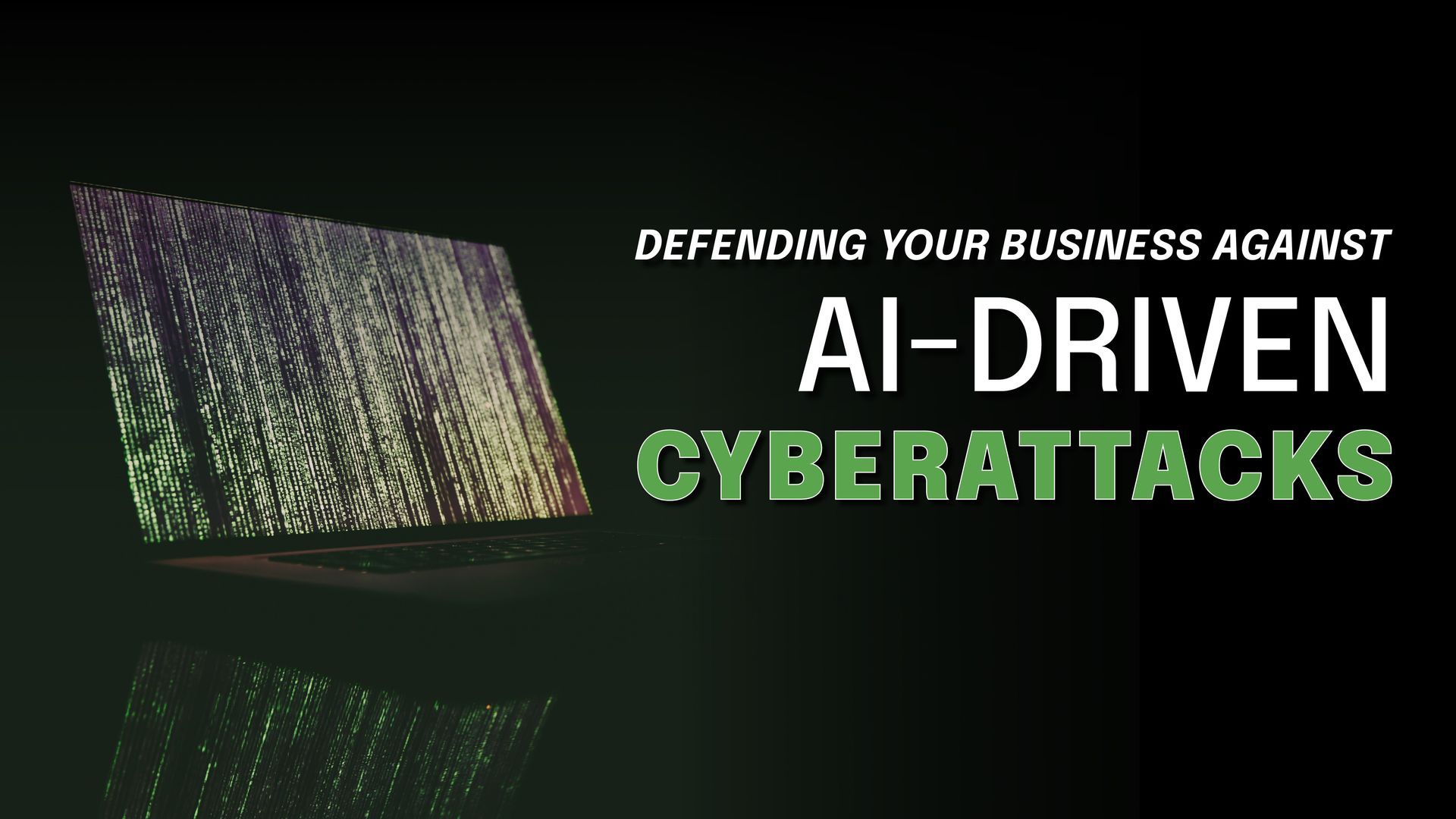
In 2026, cyberattacks aren’t just increasing. They’re evolving.
For years, cybersecurity felt dramatic. Hackers in hoodies. Ransom notes on screens. News headlines about massive breaches. But that’s not what most real-world incidents look like anymore. Artificial intelligence has fundamentally reshaped the threat landscape. Cybercriminals now use AI to generate highly convincing phishing campaigns, develop self-learning malware and execute attacks at a speed that overwhelms traditional defenses.
For IT teams, this isn’t a future problem. It’s happening now.
What AI Is Actually Changing
AI isn’t inventing new categories of cyberattacks. Phishing, ransomware and credential theft are still the primary entry points. What AI changes is speed and scale.
Tools now exist that allow attackers to:
- Analyze publicly available information about your company in minutes
- Generate emails that match your leadership team’s tone and structure
- Test thousands of credential combinations automatically
- Adjust attack behavior based on how your systems respond
In the past, many of these tactics required manual effort and technical expertise. Now, they can be automated and deployed broadly. The result isn’t necessarily “smarter” attacks. It’s faster execution and more believable entry points.
Why Speed Is the Real Risk
Most organizations don’t collapse because they lack security software. They struggle because response takes time. Someone notices unusual activity. It gets reviewed, a decision is made and action follows. That sequence used to provide a comfortable buffer. AI compresses that buffer.
If a compromised credential is used after hours, how quickly would it be detected? If an internal account begins accessing data it normally doesn’t touch, would that trigger investigation immediately — or later? The gap between compromise and consequence is shrinking. Environments that rely on reactive processes feel that pressure first.
Where Complexity Creates Exposure
This is especially true for growing businesses. Not because they’re careless — but because growth naturally layers technology over time. New platforms are adopted. Remote access expands. Permissions are granted to solve immediate needs. Vendors integrate into systems. Legacy configurations remain in place.
Individually, these decisions make sense. Collectively, they create complexity.
AI-driven attacks don’t need obvious weaknesses. They look for overlooked ones — excessive permissions, inconsistent multi-factor authentication, outdated access policies or limited monitoring outside of business hours.
From a leadership perspective, the concern isn’t “Are we secure?” It’s “Do we have clear visibility into how secure we actually are?”
What Still Works in 2026
The response to AI-driven threats is not panic and it’s not constant tool replacement. It’s disciplined execution of security fundamentals.
Strong identity management remains the foundation. That means:
- Enforcing multi-factor authentication consistently
- Limiting administrative privileges
- Regularly reviewing who has access to what
Continuous monitoring is equally important. Not just collecting logs, but actively reviewing abnormal behavior — especially after hours. Network segmentation and least-privilege access reduce how far an attacker can move if they gain entry.
And perhaps most importantly, a documented and tested incident response plan ensures decisions can be made quickly when needed.
AI may accelerate attacks, but structured environments still limit impact.
The Leadership Conversation
Cybersecurity is no longer just a technical discussion. It’s an operational stability issue.
The real questions for business leaders are practical:
- Would we detect abnormal activity quickly?
- Could we contain it without widespread disruption?
- Are our backups isolated and tested?
- Has our response plan been exercised under realistic conditions?
These aren’t fear-based questions. They’re resilience questions. Organizations that ask them proactively tend to navigate incidents calmly. Organizations that avoid them often find themselves reacting under pressure.
From Functional to Predictable
Many businesses have IT systems that function well day to day.
Predictability is different. Predictability means:
- Access is controlled intentionally.
- Monitoring is consistent.
- Recovery plans are realistic.
- Security evolves as the business grows.
AI-driven threats raise the baseline, but they don’t change the fundamentals of good governance. They simply reward organizations that are structured — and expose those that are improvising.
At Seifert Technologies, our role isn’t to create alarm. It’s to provide clarity.
We help organizations evaluate their current posture, identify hidden exposures and implement practical improvements that reduce risk without disrupting operations. If you’re unsure how your current environment would hold up against today’s accelerated threat landscape, that uncertainty is normal. The important step is turning it into insight — before an incident forces the conversation.
Call 330.833.2700 ext. 113 or email sales@seifert.com to schedule a security review today.
FAQs About AI-Driven Cyberattacks
What makes AI-driven cyberattacks different from traditional attacks?
They automate reconnaissance, scale quickly and generate highly realistic phishing and credential-based attacks, reducing the time between breach and impact.
Are small and mid-sized businesses really at risk?
Yes. Automated tools allow attackers to target many organizations simultaneously, and growing businesses often have complex environments that create overlooked vulnerabilities.
Is traditional antivirus enough protection?
Antivirus and firewalls are important, but they must be supported by identity controls, proactive monitoring and tested response procedures.
What is the most effective defense strategy today?
A layered approach: strong identity management, consistent multi-factor authentication, limited privileges, continuous monitoring and a realistic disaster recovery plan.
How can Seifert Technologies help?
We assess your security posture, strengthen identity and access controls, implement proactive monitoring and help build response strategies designed for today’s threat environment.