Cybersecurity Beyond the Office: What Else Is Connected to Your Business?
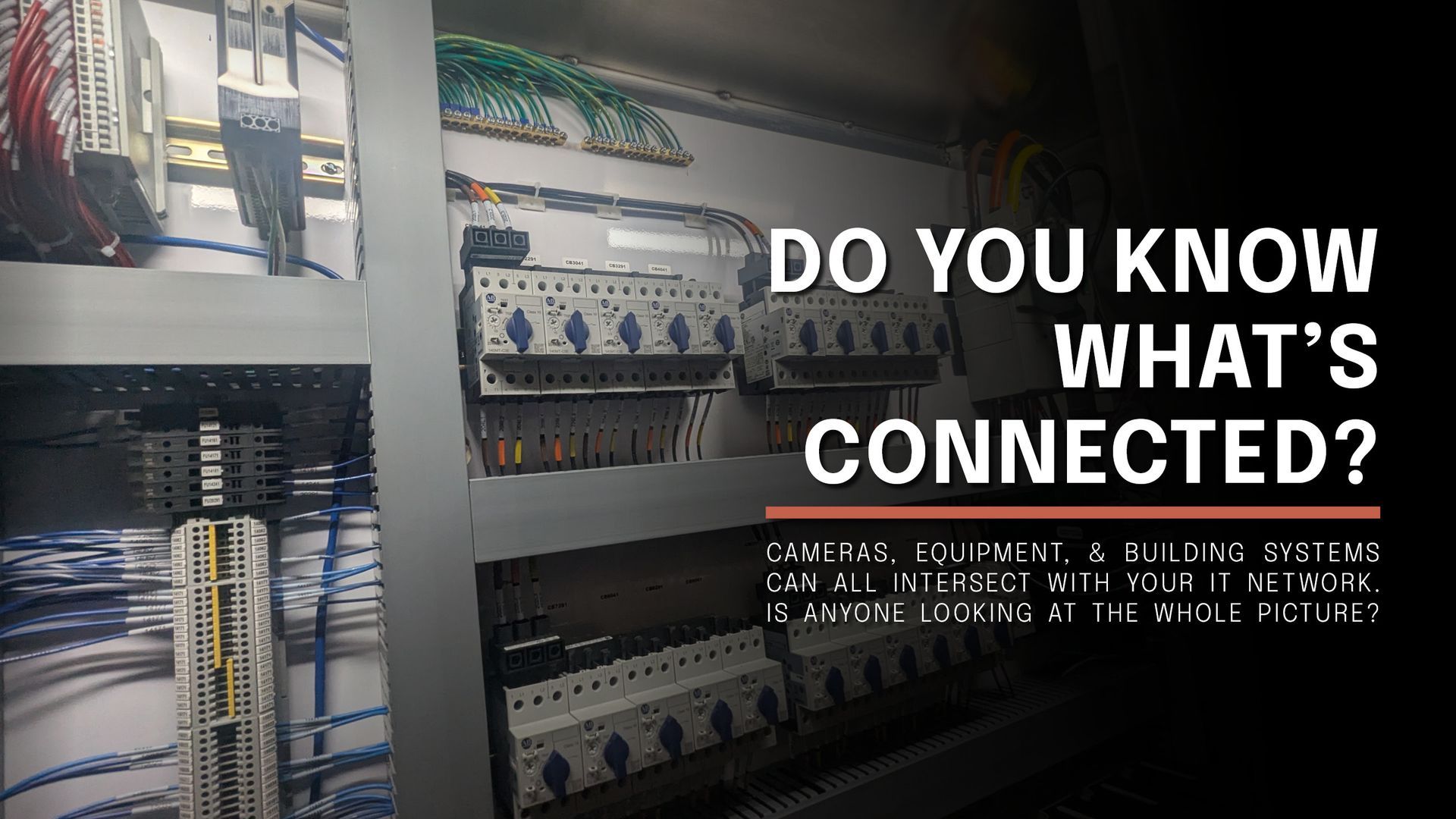
When business leaders think about cybersecurity, they usually think about the obvious targets: email, company data, employee computers, servers and cloud applications.
But those may represent only part of the technology keeping the business running.
Security cameras connect to the network. Vendors log in to service equipment remotely. Building systems communicate over IP networks. Manufacturers connect production equipment for monitoring and support. Even devices that were never considered part of “IT” may now depend on the same underlying network infrastructure. That changes the cybersecurity conversation.
The question is no longer simply, “Are our computers and data protected?” Business leaders also need to ask: What else is connected to our IT environment—and what could happen if one of those connections were compromised?
Attackers Don’t Care Which Department Owns the Technology
A connected system does not have to contain sensitive customer data to create risk. It may provide another way into the IT environment through vulnerable software, credentials or remote access. Or the system itself may be important enough that losing access creates an operational problem.
Recent research shows why businesses should be looking beyond the traditional perimeter. Verizon’s 2026 Data Breach Investigations Report found that exploitation of software vulnerabilities became the leading initial access vector in the breaches it studied. Third-party involvement also appeared in 48% of breaches—up from 30% the previous year.
Those findings matter because modern businesses depend on an increasingly interconnected mix of technology and outside providers. Vendors may need remote access to support equipment. An older device may still work reliably but run software that is difficult to update. Specialized equipment may have been installed without ever being considered part of IT. None of those situations automatically means a business is insecure. But they do create questions worth answering.
A Real-World Warning About Connected Systems
The water sector provided a clear example this year.
In April 2026, the EPA, FBI, CISA and NSA issued a joint advisory after U.S. organizations experienced exploitation—and in some cases disruption—of operational technology. The agencies warned that attackers were actively targeting internet-exposed programmable logic controllers (PLCs) and other industrial control devices, including systems used by local drinking water and wastewater utilities.
Most businesses don’t operate anything like a municipal water system. But the broader lesson still applies:
A system does not have to look like traditional IT to create a cybersecurity risk.
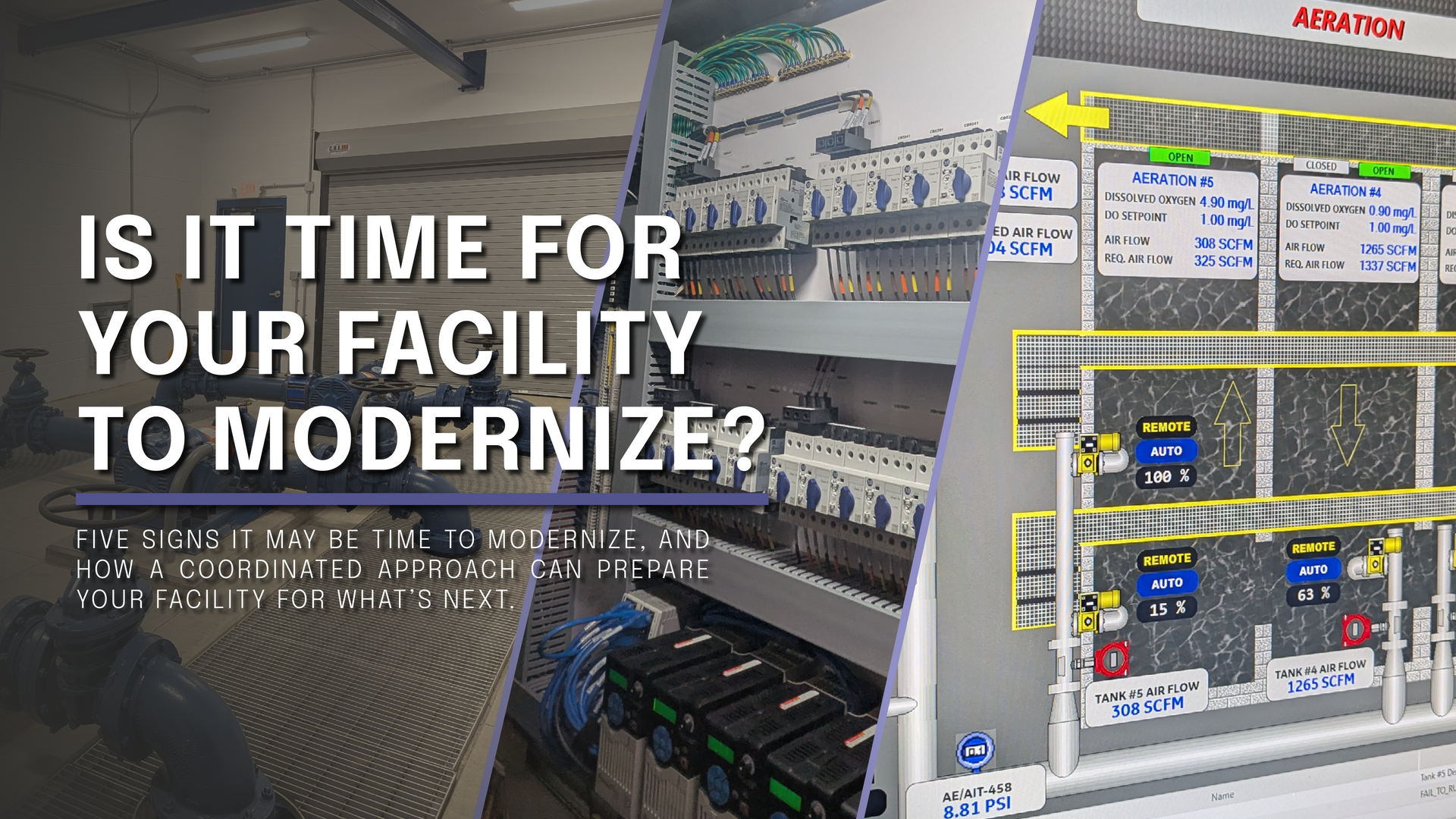
This includes not only operational technology (OT), but also cameras, building controls, access systems, vendor-managed equipment and other technology connected to a business environment. The lesson is not to disconnect everything. It’s to understand the connections you need—and protect them appropriately.
One of the Biggest Blind Spots Can Be Third-Party Access
NIST’s Cybersecurity Framework 2.0 reinforces the need for businesses to understand what is connected to their environments by placing greater emphasis on governance and cybersecurity supply-chain risk, including risks associated with technology products, services and suppliers.
“The vendor handles it” may answer who services the equipment.
It does not answer who is managing the cybersecurity risk.
Consider a common scenario: A business purchases specialized equipment, and the vendor offers remote support so a technician can troubleshoot it without traveling to the facility. That access may be useful and entirely appropriate. But who is responsible for securing the connection?
The equipment vendor understands the equipment. Your operations team understands how the business uses it. Your IT provider understands the network. Good cybersecurity requires those responsibilities to meet. That means knowing how remote access is established, how users authenticate, who still has credentials and what the connected system can communicate with once someone gets in.
Five Questions Leadership Should Be Able to Answer
You do not need a detailed network diagram on your desk. You do need confidence that the right people can answer a few basic questions:
1. What is connected to our environment?
Look beyond computers and servers to networked equipment, cameras, access controls, building systems and other connected devices.
2. Which systems can be accessed remotely—and by whom?
Consider employees, IT providers, equipment vendors and contractors.
3. Are important systems appropriately separated?
A device that needs network access does not necessarily need access to everything else.
4. Who is responsible for keeping each system secure?
If the answer is “the vendor,” clarify what they manage and where your organization’s responsibility begins.
5. What happens if one of these systems becomes unavailable?
Cybersecurity is also a business-continuity issue. Know which systems could affect operations and how the business would recover.
If your leadership team cannot answer all five today, you haven’t failed a cybersecurity test.
It just means you know where the next conversation should begin.
Your IT Partner Should Help You See the Whole Environment
A proactive IT partner should help protect your business—not just by supporting technology when something goes wrong, but by understanding the larger IT environment, reviewing how systems and third parties connect to it, identifying unnecessary exposure and helping leadership prioritize risk.
You do not need to become a cybersecurity expert to ask better questions about your business.
You need an IT partner who can help you answer them.
If you're unsure what may be connected beyond your traditional IT network—or how well those systems, vendors and access points are being managed—Seifert Technologies can help.
Call 330.833.2700 ext. 113 or email
sales@seifert.com to start the conversation today.